Into the Storm
Published March 2026
By Brooke Carman | 8 min read
Walking through the doors of City of Thunder Fencing Club inside Oklahoma City’s Quail Springs Mall doesn’t feel like entering a gym—it’s like stepping into the middle of an adventure. Bright flags from twenty-three nations sweep across the walls, marking where the club has competed around the world. Blades flash like lightning. Laughter rises between the sharp clinks of steel. There’s energy, excitement, and just a hint of magic in the air.
At the center is David Ribaudo. Years ago, the local fencing community was at a crossroads. One club owner was preparing to retire, another club was closing its doors, and a sport that once thrived was slipping away. For Ribaudo, that wasn’t an option. Fencing had shaped his life too deeply to watch it disappear. Instead, he took a leap of faith—merging the two clubs, rebuilding the community from the ground up, and creating what now is City of Thunder Fencing Club in 2016.
His personal journey with fencing didn’t begin with swords or medals. At Oklahoma City University, he was a tennis player focused on a different path. Fencing wasn’t even on his radar until his roommate, a member of the fencing team, asked him to come watch a practice. That moment rerouted his entire life.
“It was the best decision I ever made,” Ribaudo says. “I ended up getting a fencing scholarship. Everything changed.”
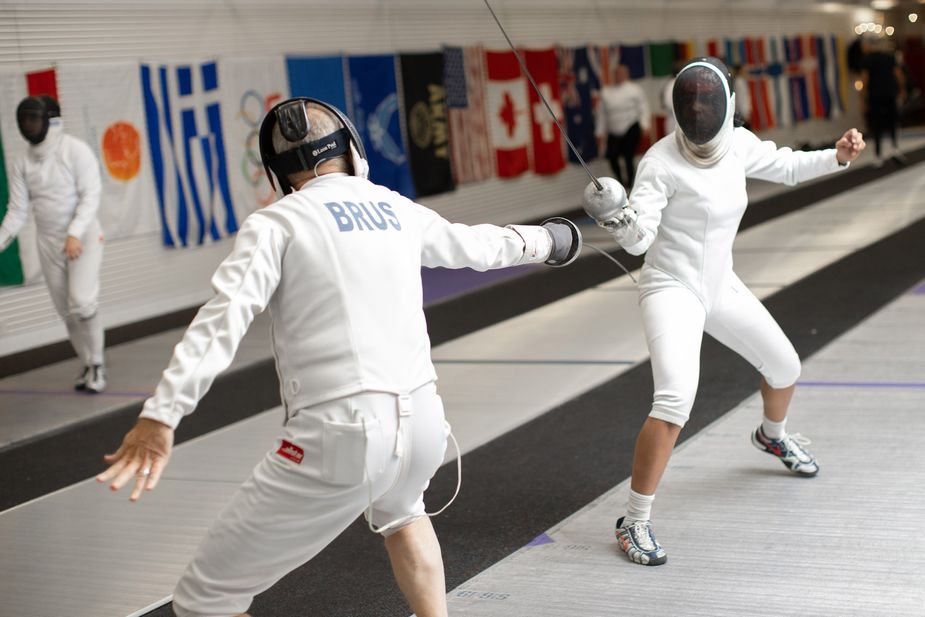
At City of Thunder Fencing Club, introductory classes are $100, private lessons are $30 to $50, and monthly memberships are $120 to $225. Photo by Brent Fuchs
From the first time he picked up a blade, he felt something powerful—something he hadn’t experienced in any other sport. Fencing wasn’t just movement: It was strategy, instinct, and anticipation all happening at once.
“It’s physical chess,” he says. “People are moving and guessing in real time. It’s boxing without the concussions.”
That passion followed Ribaudo into the U.S. Army, where he fenced competitively from 1986 to 1997. Those years challenged him physically and mentally, shaping his discipline and sharpening his understanding of the sport. Competing at a high level taught him resilience, humility, and the importance of learning from every loss. When his military service ended, one mission remained clear: He wanted to keep fencing alive and accessible for future generations.
“The fencing community is its own little world,” Ribaudo says. “We’re all like family.”
What makes fencing so captivating, he explains, is that it’s never boring. No two bouts are alike, because no two fencers are alike. Every person brings a different rhythm, mindset, and strategy to the strip. One moment, fencers are on the attack, and the next, they’re adapting.
“That’s what makes it adventurous,” Ribaudo says. “You never get tired of it. You’re always learning.”
Besides using the sport to help inspire confidence, courage, and resilience, Ribaudo and City of Thunder Fencing give people a place to belong and to grow. People who don’t always fit in elsewhere often find an instant home here. One of the organization’s standout fencers, Zeph Yang, certainly did. He received a fencing scholarship to the University of the Incarnate Word in Texas.
“If you don’t fit in the real world, you’ll fit perfectly in the fencing world,” the Edmond native says.
It’s a place where people cheer for each other, celebrate every victory, and learn from every loss. In fact, Ribaudo teaches beginners to embrace losses, not fear them.
“You take something away from every defeat,” he says. “Those lessons become your victories.”
And the learning doesn’t stop at the club’s doors. City of Thunder fencers travel frequently, competing across the country. The club ranks among the top thirty of the five hundred clubs in the United States and serves as the regional headquarters for U.S. Fencing. Ribaudo himself is the division chairman for USA Fencing, helping guide the sport at a higher level while staying deeply connected to the athletes he coaches every day.
Yet whether nationally ranked competitors or first-time fencers, everyone hears the same message when they step onto the strip: Relax, have fun, and don’t ever fear losing.
One of the biggest misconceptions the coach encounters is that fencing is inaccessible or too expensive. He quickly corrects that belief.
“Anyone can start,” Ribaudo says. “Anyone can pick up a blade and have a good time.”
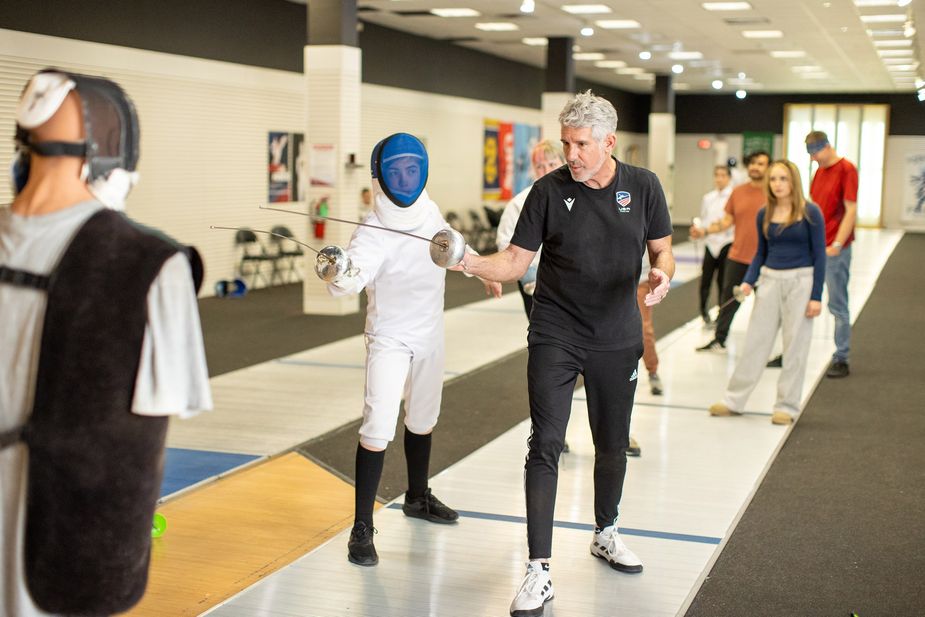
David Ribaudo’s club also features lightsaber classes and bouts on Saturday nights. Photo by Brent Fuchs
At City of Thunder, introductory classes include all the necessary equipment, which makes it easy for newcomers to try the sport. Families are welcome to watch practices, children train alongside adults, and teammates cheer each other on from the sidelines. Many young fencers begin simply because they are curious and end up going on to earn college scholarships—just as Yang and Ribaudo did.
Once newbies give fencing a try, they often find themselves enchanted by the majesty of the sport. Ribaudo mentions the back-flex curve, when a blade bends like a ribbon of silver lightning and lands a touch on an opponent’s back.
“Some moments you wouldn’t believe unless you saw them,” he says. “When you fence, you go into another world. You push everything else away. Nothing else matters. You’re fully alive.”
Even tucked away in a mall, City of Thunder’s presence is impossible to ignore. Shoppers stop to watch. Curious passersby linger.
“People are very receptive,” Ribaudo says. “They always want to stop and see what’s happening.”
Inside these walls, beginners become warriors. Losses become lessons. Strangers become family. As complex as the sport may be, it’s not difficult for Ribaudo to sum it up in one sentence: “Fencing is life.”