Go West
Published August 2026
By Megan Rossman | 14 min read
On a warm November day in 1955, three thousand people—including more than a thousand on horseback from riding and roundup clubs—bore witness at the top of Persimmon Hill in northeast Oklahoma City as thirty-seven acres of land were dedicated to the future home of the National Cowboy Hall of Fame. Presiding as the master of ceremonies, Will Rogers Jr. made the opening remarks, joined by dignitaries that included Oklahoma City mayor Allen Street, Governor Raymond Gary, and Kansas City businessman and museum founder Chester Reynolds, who, sadly, would die in 1958 before he saw his dream’s completion.
“As all great folk legends rest on truth, so does the legend of the American cowboy,” Rogers said, as reported in The Daily Oklahoman. “Here we are going to have an open page in the tradition of the American West. It will be an outstanding success, I know, and I’m glad that it is to be located here. It will draw people from all over the world, because what it will portray for them is genuine.”
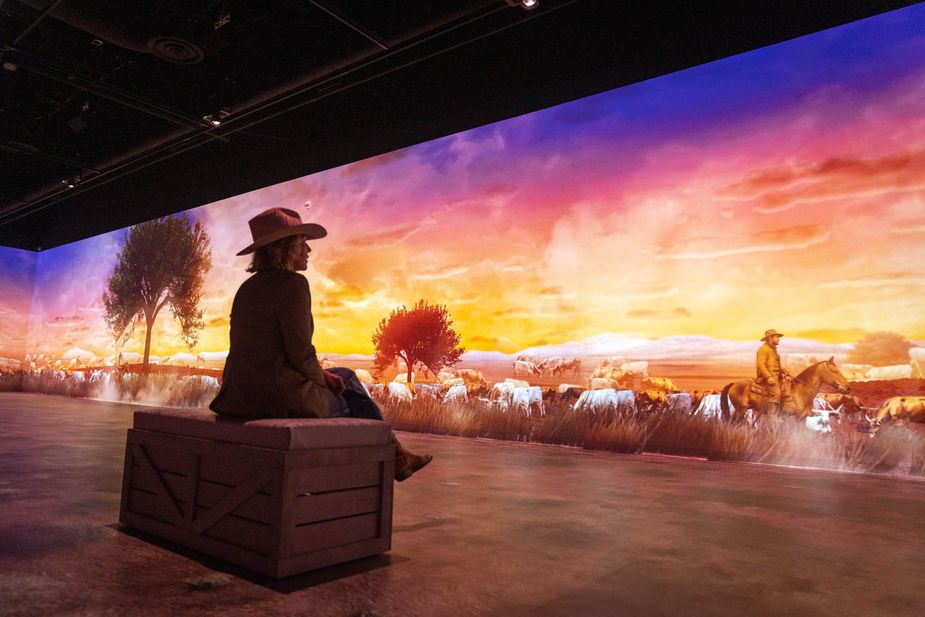
The Cowboy: An Immersive Journey is one of the newest and most technologically advanced experiences for visitors at the National Cowboy & Western Heritage Museum in Oklahoma City. Photo courtesy National Cowboy & Western Heritage Museum
The day was several years in the making for Reynolds, a former executive at Lee Jeans who quit his job to pursue the museum full-time and in 1953 had begun petitioning governors across the country to create an institution honoring rodeo cowboys. Oklahoma City beat out Dodge City, Kansas, and Colorado Springs with a vote of twenty of thirty-two trustees on the recently formed board. While the state’s robust rodeo and cowboy industry and history swayed votes, it was half a million dollars in donations and the city’s land offer alongside the hip highway known as Route 66 that ultimately sealed the deal. In a meeting that day, the board decided on the museum’s first five inductees: Theodore Roosevelt, Charles Russell, Will Rogers, Charles Goodnight, and Jake McClure.
After initial fundraising hiccups and a name change to the National Cowboy Hall of Fame and Western Heritage Center, the museum opened to the public almost ten years later on June 26, 1965. To kick off a celebratory week of events, John Wayne himself grand marshaled a parade that stretched from downtown Oklahoma City to the museum.
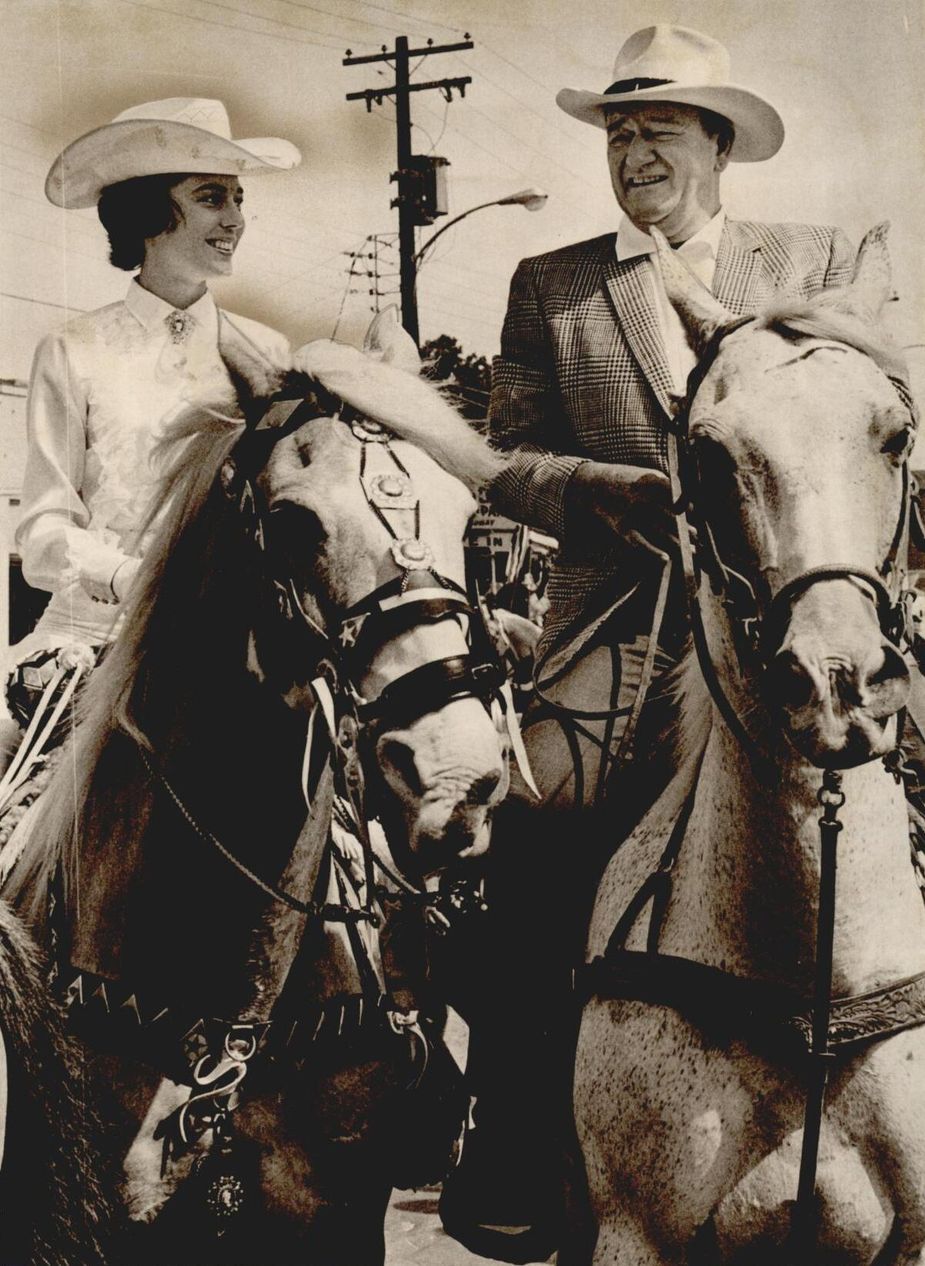
John Wayne and parade queen Neva Sue Butler led the museum’s opening procession through Oklahoma City. Tony Wood/Oklahoma Historical Society
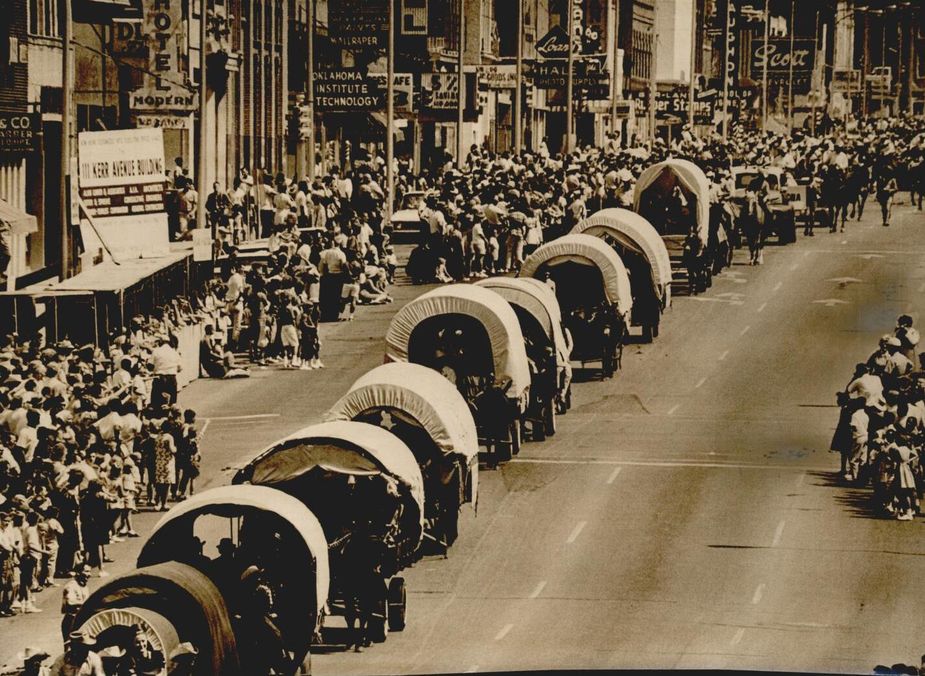
A giant parade in celebration of the opening kicked off in downtown Oklahoma City and traveled to the museum in June 1965. Jim Argo/Oklahoma Historical Society
In the sixty-plus years since that day and the seventy since its founding, the National Cowboy & Western Heritage Museum has weathered its share of ebbs and created traditions that flow from decades past into present—like the Western Heritage Awards and the National Rodeo Hall of Fame, established in 1961 and 1955, respectively, before the museum was even open; the Traditional Cowboy Arts Association Exhibition & Sale, held every September since 1999; and the museum’s biggest annual fundraiser, the Prix de West Invitational Art Sale & Exhibition, founded in 1973 when the museum established the National Academy of Western Art, which in turn created the show that came to be known as Prix de West. Since its inception, the art gala has become the world’s premier Western art event. And the museum’s biggest expansion since the mid-1990s brought Liichokoshkomo’ (meaning let’s play in Chickasaw) in March 2020, introducing 100,000 square feet of new outdoor spaces that include an ancient Puebloan cliff dwelling, Kiowa teepee, Chickasaw council house, covered wagon, train depot, playground, event building, and other life-sized replicas to explore.
Events, too, are a continual draw for The Cowboy. The annual Chuck Wagon Festival brings in around seven thousand visitors for food, crafts, and games during the last weekend in May, and other celebrations like the National Day of the Cowboy in July, HalloWest, the National Rodeo Hall of Fame Weekend, and Deck the Hall also bring in their share of revelers.
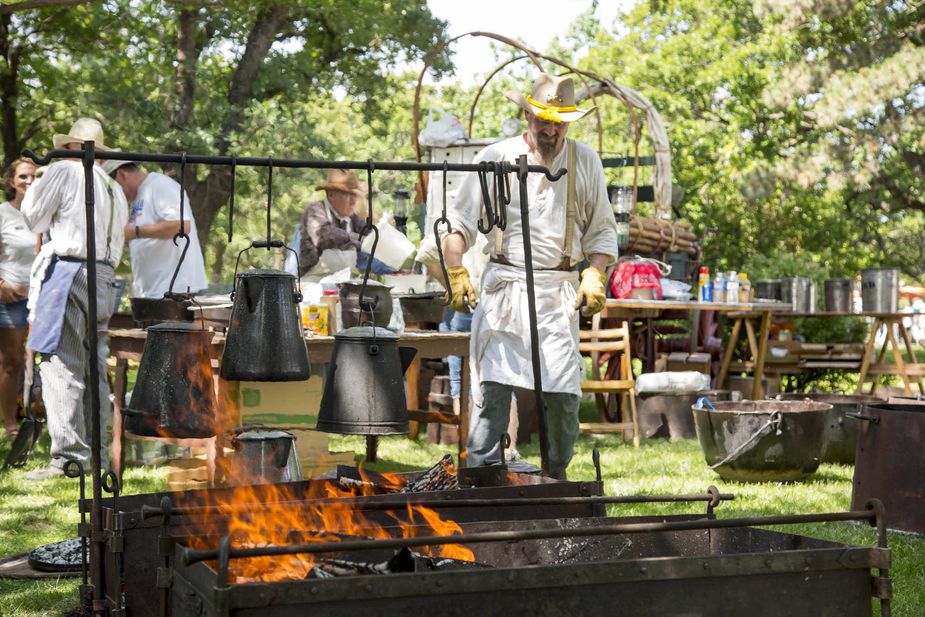
The annual Chuck Wagon Festival has been taking place every spring for 35 years. Photo by Lori Duckworth
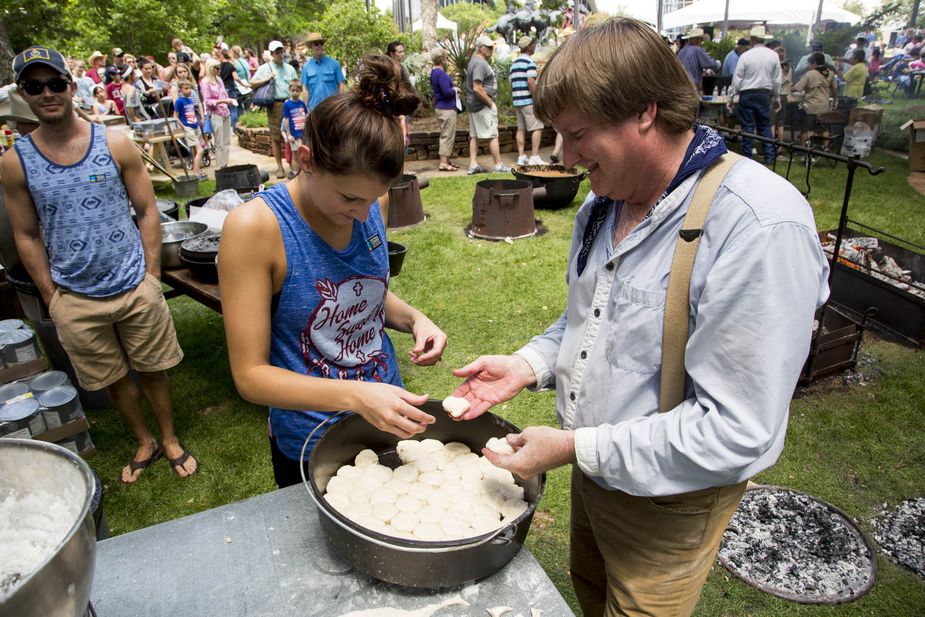
Guests at the Chuck Wagon Festival can sample and sometimes help make foods like grape dumplings, cobbler, stew, and cornbread. Photo by Lori Duckworth
Even with missions grounded in preservation and history, museums are not exempt from technological renovations; The Cowboy has ranged across new terrain in the last few years on that frontier.
“We’re entertaining while we’re educating,” says president and CEO Pat Fitzgerald. “We want to make it more experiential, but it’s always going to be based on art and artifact. Our vision is to continue to be the premier storytelling space in the world for cowboys and the West and to protect and preserve that legacy.”
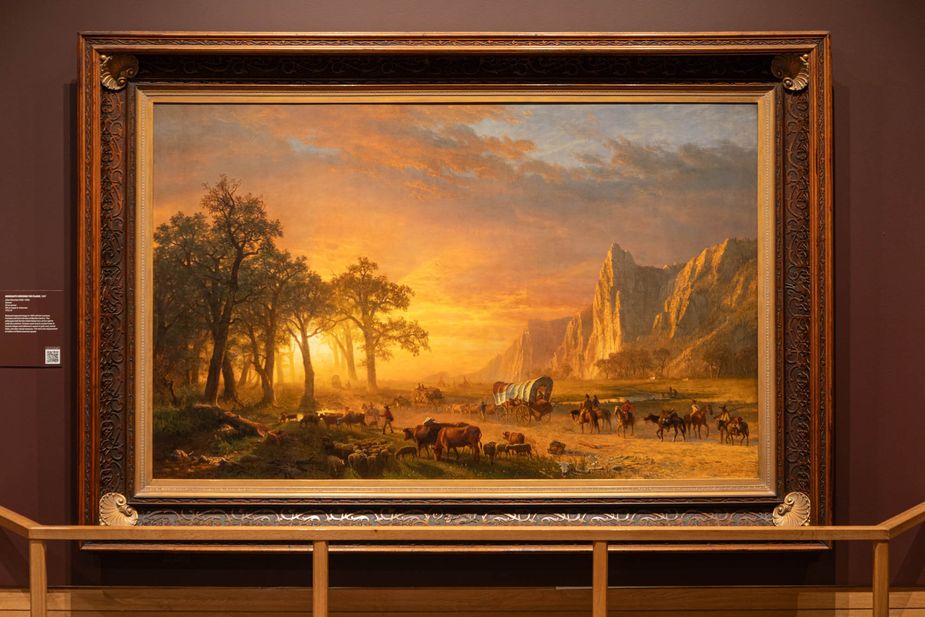
Albert Bierstadt’s 1867 masterpiece Emigrants Crossing the Plains has been displayed at the museum since 1972. Photo by Lori Duckworth
Oklahoma City native Fitzgerald took the helm in 2022, bringing with him decades of experience in executive roles at companies like Disney, Apple, and Citibank. The arrival of The Cowboy’s seventh full-time leader ushered in an embrace of new media that has resulted in a host of updates both completed and ongoing.
Since 2024, the staff has been working on the Heart & Soul initiative, which Chief Marketing Officer Seth Spillman describes as a “longtime internal process of revising the galleries.” Over the next five years—using interactive multimedia, new graphics, and redesigns—all galleries will be updated.
“We’re home to the National Rodeo Hall of Fame,” says Spillman. “That’s probably a little-known fact, and we’d like to make that a well-known fact. So that’s part of what we’re looking at in the Rodeo Gallery renovation. Where you previously didn’t really have that story as part of the gallery, now it will be front and center.”
In his momentum to modernize, Fitzgerald even recruited one of his former Disney coworkers, Bob Miller, to join the museum staff as an Imagineer. It was a role Miller also held at Disney, which famously created the job and title. In the broadest terms, the position focuses on engineering ambitious ideas into existence. Miller’s expertise came in handy with one of the museum’s newest additions, The Cowboy: An Immersive Journey. Lighthouse Immersive—best known for its experiential traveling Immersive Van Gogh and Immersive Disney exhibits—and The Cowboy staff teamed up to create an original film experience that completely envelops visitors in 360 degrees of cinematic scenes ranging from hypnotic starry skies and explosive prairie thunder storms on the frontier to rumbling bison herds and cowboys on horseback accompanied by an original score and cowpoke ballads. The approximately forty-minute film brought in 21,000 viewers during its initial run from January to early May, and it will return July 25 for another limited run. The staff already is in the early stages of planning for the possibility of a new experience with Lighthouse for 2027.
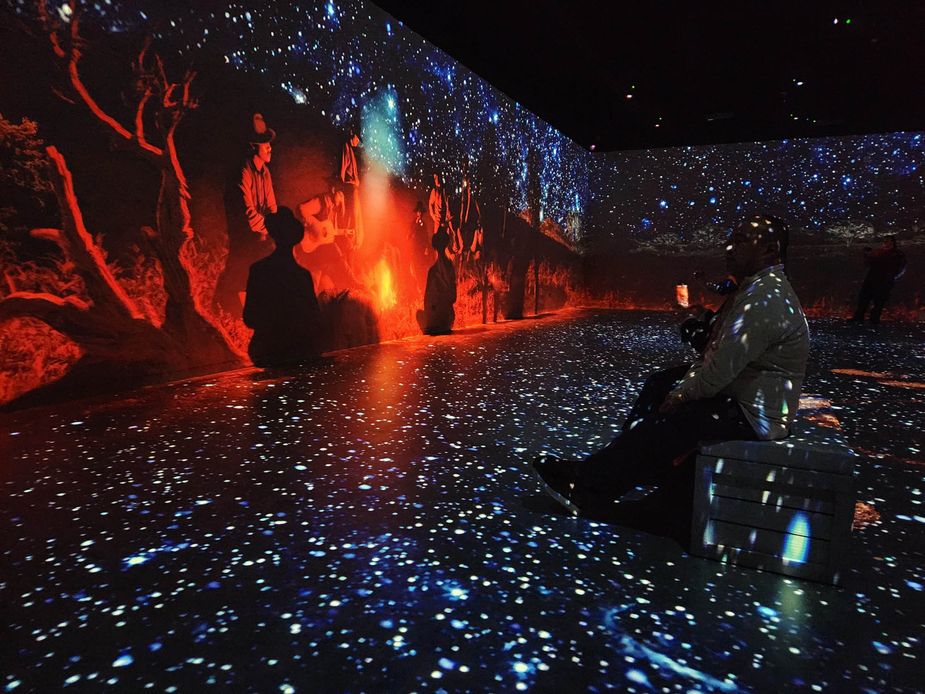
Visitors sit under the simulated stars at The Cowboy: An Immersive Journey. Photo by Megan Rossman
Even as it phases into the future, the museum’s core objective remains the same: telling the story of the American West with the help of its expansive collections and loaned works. With 710,000 photos, 45,000 books, thousands of objets d’art, and a new vault that nearly doubles the material culture storage, the 220,000-square-foot museum is not veering from its role as a chronicler of history and culture.
“It’s not just an art museum, and it’s not just a history museum—it’s a perfect blending of both,” says David Davis, chief curatorial officer and McCasland Chair of Cowboy Culture. “An all-encompassing history museum with a fantastic art collection is what we are, and that gives us a lot of very special opportunities to do some really cool exhibits.”
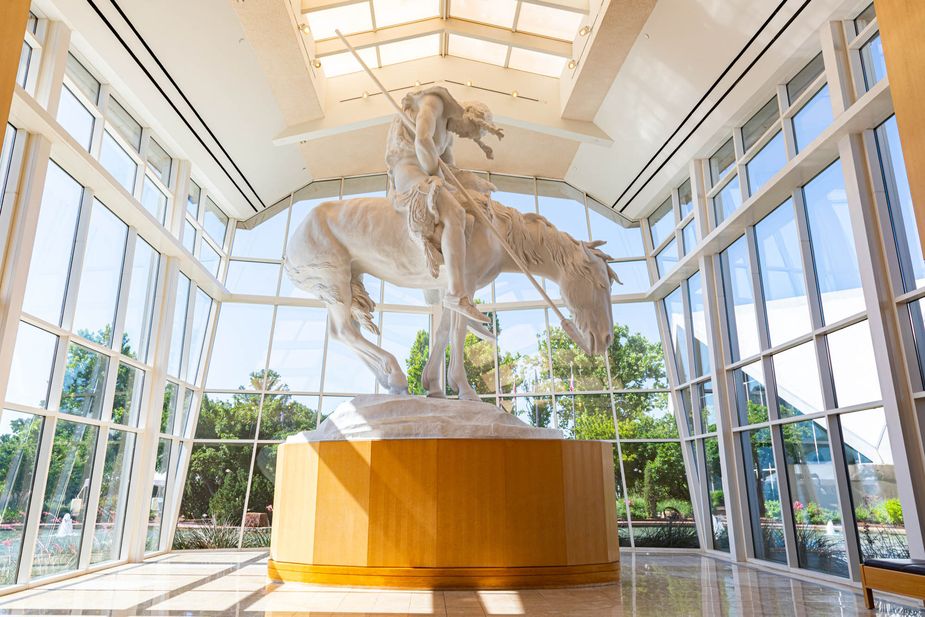
At 7,500 pounds, The End of the Trail by James Earle Fraser is easily the museum’s most iconic art piece. Photo by Saxon Smith
In recent years, a small sampling of those displays include Cowboy Boots: From Roundups to Runways, showcasing hundreds of pairs of iconic footwear and sponsored by Lucchese; Black Cowboys: An American Story, which told the story of Black Americans who shaped the West; Lighting Pathways: Matriarchs of Oklahoma Native Art, a collection of works from Indigenous late-twentieth-century female artists; and in 2026, Route 66: From Trails to Truck Stops, which broke attendance records at its opening. Coming in early 2027, Lights, Camera, Cowboy! will explore the depictions of cowboys in movies and television.
Of course, the classic showstoppers that generations of visitors have encountered since their third-grade school trips haven’t gone anywhere. Prosperity Junction, for example, the Old West replica town with storefronts, homes, and a livery, still is a perennial favorite. And galleries showcasing Western performers, Native American art and culture, antique firearms, and spectacular paintings like Albert Bierstadt’s Emigrants Crossing the Plains continue to captivate visitors, and newly added touchscreen stations throughout provide more information and context for the displays. And of course, James Earle Fraser’s 1915 The End of the Trail sculpture—the famed eighteen-foot plaster figure of an Indigenous warrior on horseback, a visual reminder that many people did not choose to go West—still is the first thing guests see when they enter the front entrance.
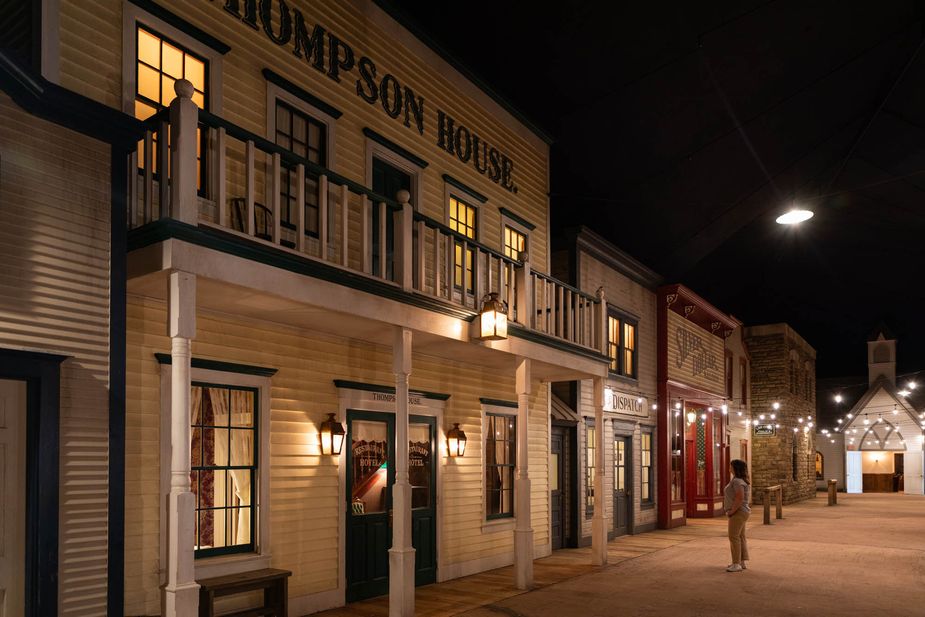
Prosperity Junction is a replica frontier town that’s been a visitor favorite for decades. Photo by Saxon Smith
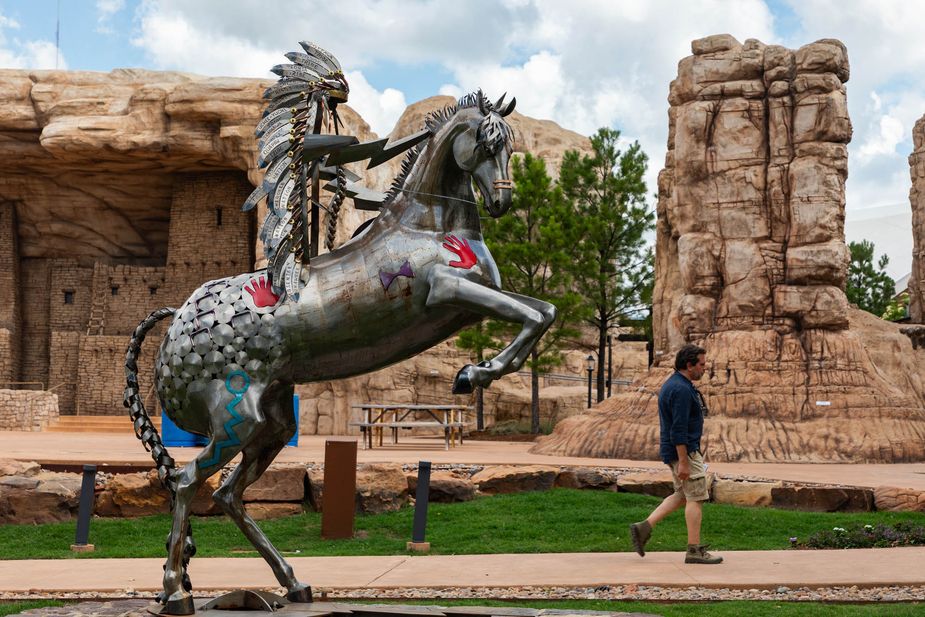
A Puebloan village is one of several buildings that make up the 100,000-square-foot outdoor Liichokoshkomo’ exhibit. Photo by Saxon Smith
“The museum’s really grown to encompass the American West instead of just the cowboy, and I think that’s important to talk about because it’s in our name, you know?” says Davis. “We’re a holistic representation of the American West and how it’s so directly tied to American identity. What I feel really strongly about is accessible public history that’s understandable to any age and is also engaging, truthful, and doesn’t have hidden agendas. It’s just straight-up history.”
Whether visitors are here learning about that heritage through the lenses of state-of-the-art laser projectors or standard object labels identifying turn-of-the-century artifacts, they’re immersed in a tale that’s still unfolding all around us as Americans.
“We need people to see that the West is alive and thriving,” says Fitzgerald. “We need to tell the stories relevant to today’s people, not just the past.”